
Understanding the cost of health coverage in relation to your age is crucial for making informed decisions about your health coverage options. As you navigate the complex health insurance market, you might wonder if you’re paying the right premium based on your age group.
Several factors influence health insurance pricing, including your age, location, and the level of coverage you choose. Knowing the average costs associated with your age group can help you identify the best coverage options and potentially lower your expenses.
Key Takeaways
Table of Contents
- Factors that affect health insurance pricing
- Strategies to lower your health insurance costs
- Understanding average health insurance costs by age
- Tips for navigating the complex health insurance market
- Best practices for choosing the right health coverage
Understanding Health Insurance Pricing Factors
Understanding the factors that influence health insurance pricing is crucial for making informed decisions. Health insurance pricing is not arbitrary; it is based on a variety of factors that insurance companies use to determine premiums.
How Insurance Companies Determine Premiums
Insurance companies determine premiums based on the likelihood of claims being made. Factors such as age, location, and health status play a significant role in this determination. For instance, older individuals or those with pre-existing conditions may be charged higher premiums due to the increased health risks associated with these factors.
The Legal Framework: ACA’s 3:1 Age Rating Limitation
The Affordable Care Act (ACA) introduced significant reforms to health insurance pricing, including the 3:1 age rating limitation. This means that older adults cannot be charged more than three times the premium charged to younger adults. The key points of this limitation include:
- Protects older adults from excessive premium increases
- Encourages a more balanced risk pool across different age groups
- Helps make health insurance more affordable for seniors
By understanding these pricing factors and the legal frameworks that govern them, individuals can better navigate the health insurance market and make more informed decisions about their coverage.
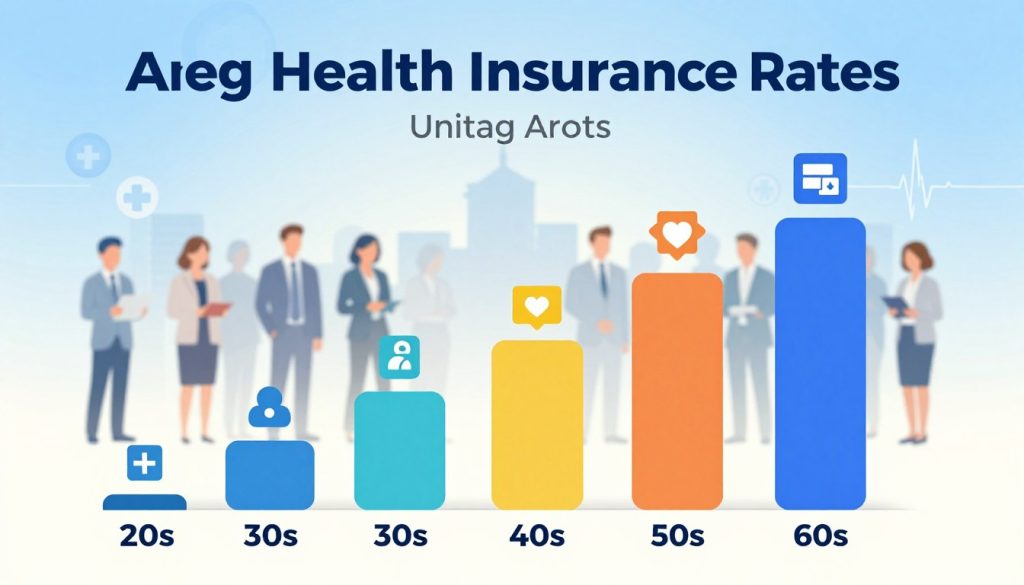
Average Health Insurance Rates by Age in the United States
The cost of health insurance is heavily influenced by age, with different age brackets experiencing distinct premium rates. This variation is due to the differing health risks associated with various age groups.
Young Adults (18-25): Typical Premium Ranges
Young adults often benefit from lower health insurance premiums. This age group can explore options like:
- Student Health Insurance Plans: Many educational institutions offer affordable health insurance plans for students.
- Parent Plan Coverage Until Age 26: The Affordable Care Act allows young adults to stay on their parents’ health insurance until they turn 26.
Student Health Insurance Options
Student health insurance plans are designed to be cost-effective, providing essential coverage for those in educational institutions.
Parent Plan Coverage Until Age 26
This provision under the ACA enables young adults to maintain coverage under their parents’ plan, often at a lower cost than individual plans.
Adults (26-45): Mid-Career Insurance Costs
Adults in this age bracket typically experience moderate premium rates. Factors influencing their insurance costs include family size, health status, and employment-based insurance options.
Pre-Retirement (46-64): Managing Higher Premium Brackets
As individuals approach retirement age, their health insurance premiums often increase due to higher health risks. Strategies for managing these costs include:
- Comparing different insurance providers to find the best rates.
- Opting for higher deductible plans to lower monthly premiums.
Seniors (65+): Medicare and Supplemental Coverage
Seniors typically transition to Medicare for their primary health coverage. Supplemental insurance plans can help cover out-of-pocket costs associated with Medicare.
Understanding these age-related factors can help individuals and families make informed decisions about their health insurance, potentially lowering their costs and improving their coverage.
How to Research Current Health Insurance Rates for Your Age Group
Researching health insurance rates can be a daunting task, but understanding the process is crucial for making informed decisions. To get started, it’s essential to gather your personal information, explore available resources, and compare different insurance options.
Step 1: Gather Your Personal Information
Before you begin researching health insurance rates, gather your personal information, including your age, income level, and any pre-existing medical conditions. This information will help you determine which insurance plans you’re eligible for and what your premiums might be.
Step 2: Explore Healthcare.gov and State Marketplaces
Visit Healthcare.gov and your state’s marketplace to explore available insurance plans and compare rates. These websites provide a wealth of information on different plans, including their costs, coverage, and provider networks.
Step 3: Compare Private Insurance Options
In addition to exploring government marketplaces, research private insurance companies and compare their rates. Utilize online tools like eHealthInsurance or HealthSherpa to simplify the comparison process.
Step 4: Consider Working with an Insurance Broker
If you’re feeling overwhelmed, consider working with an insurance broker who can guide you through the process and help you find the best plan for your needs and budget.
Beyond Age: Other Factors Affecting Your Insurance Rates
Understanding health insurance costs requires looking beyond age to other critical factors. While age is a significant determinant, other elements play a crucial role in shaping your insurance premiums.
Geographic Location and Regional Price Variations
Your location significantly impacts your health insurance rates. Urban areas tend to have higher premiums compared to rural areas due to differences in cost of living and healthcare access.
Metal Tiers: Bronze, Silver, Gold, and Platinum Plans
The type of plan you choose also affects your premiums. Metal-tier plans range from Bronze to Platinum, with Bronze being the most affordable but offering less comprehensive coverage, and Platinum offering the most comprehensive coverage but at a higher cost.

| Metal Tier | Premium Cost | Coverage Level |
|---|---|---|
| Bronze | Lower | Basic |
| Silver | Moderate | Standard |
| Gold | Higher | Comprehensive |
| Platinum | Highest | Premium |
Tobacco Use and Health Status Considerations
Tobacco use and health status are other significant factors. Tobacco users often face higher premiums due to increased health risks.
Family Size and Dependent Coverage Impact
Lastly, family size and the number of dependents you cover under your plan affect your premiums. Larger families typically mean higher costs.
Strategies to Lower Your Health Insurance Costs
Lowering your health insurance costs can be achieved through several effective strategies. By understanding and leveraging these methods, individuals can significantly reduce their healthcare expenses.
Qualifying for Premium Tax Credits and Subsidies
One of the primary ways to lower health insurance costs is by qualifying for premium tax credits and subsidies. These are particularly beneficial for individuals and families with incomes between 100% and 400% of the federal poverty level.
Income Requirements and Application Process
To qualify, applicants must meet specific income requirements and complete an application process through the Health Insurance Marketplace or with the help of a licensed agent. It’s essential to report any changes in income to ensure continued eligibility.
Cost-Sharing Reduction Subsidies
Additionally, cost-sharing reduction subsidies can lower out-of-pocket costs for deductibles, copayments, and coinsurance. These subsidies are available to those who qualify for premium tax credits and select a Silver plan.
High Deductible Plans and Health Savings Accounts
Another strategy involves opting for high deductible plans paired with Health Savings Accounts (HSAs). High deductible plans often have lower premiums, and HSAs provide a tax-advantaged way to save for medical expenses.
Comparing Employer-Sponsored vs. Individual Coverage
It’s also crucial to compare employer-sponsored health insurance with individual coverage. In some cases, individual plans can be more cost-effective, especially for those who are not eligible for employer-sponsored plans or have lower premiums available through the marketplace.
Taking Advantage of Special Enrollment Periods
Understanding and utilizing special enrollment periods can also help lower costs. These periods allow individuals to enroll in or change health plans outside the annual open enrollment period due to qualifying life events such as marriage, having a baby, or losing other coverage.
“The key to lowering health insurance costs is to stay informed and adapt your strategy as your needs change.”
Conclusion: Making Informed Health Insurance Decisions
Navigating the complex world of health insurance can be challenging, but understanding the factors that influence average health insurance rates by age and overall costs is crucial. By considering your age, location, health status, and other key factors, you can make informed decisions about your health insurance coverage.
The health insurance pricing factors discussed in this article, including geographic location, metal tiers, and tobacco use, play a significant role in determining your insurance rates. By applying this knowledge, you can compare plans effectively and choose the best coverage for your needs.
To secure the right health insurance coverage, it’s essential to research current rates, compare private insurance options, and consider working with an insurance broker. By taking these steps, you can ensure that you and your loved ones have the protection you need.